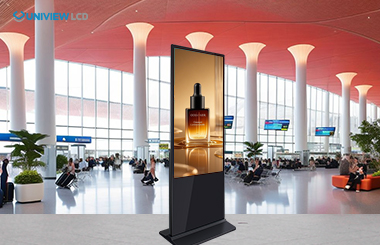
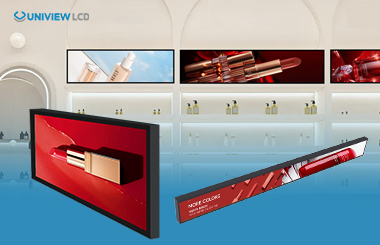
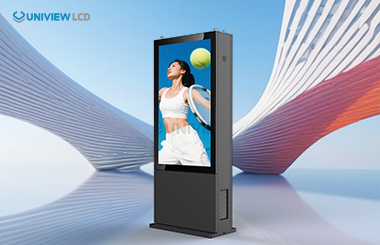
Cities worldwide now use Outdoor Floor-standing Kiosks as essential information and service hubs for pedestrians and drivers. However, harsh outdoor conditions—especially intense sunlight—pose a major challenge. Glare and poor visibility can render kiosk screens unreadable and non-functional. This article explores innovative technologies and design strategies that ensure Outdoor Floor-standing Kiosks perform reliably in bright sunlight. We’ll dive into high-brightness displays, anti-glare coatings, and adaptive brightness controls, revealing how these solutions keep kiosks visible and effective even in extreme lighting. For businesses and city officials looking to deploy functional, engaging public kiosks, these insights are critical for all-day performance.
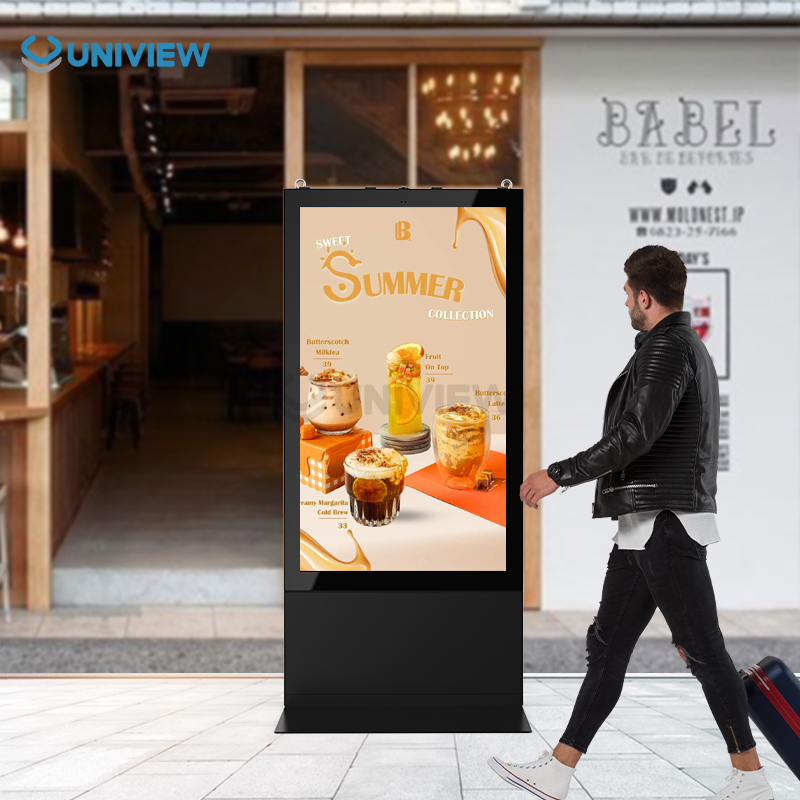
High-brightness displays are the primary technology used in Outdoor Floor-standing Kiosks to counter bright sunlight. These screens produce significantly higher light output—typically 2000 to 4000 nits—compared to standard indoor displays. This enhanced brightness ensures content remains fully visible even in direct sunlight. Advanced LED backlighting systems power these displays, delivering intense brightness without excessive power consumption or heat generation. Manufacturers like Uniview Commercial integrate these high-brightness displays into their Outdoor Floor-standing Kiosks to guarantee readability across all lighting conditions, from bright daylight to overcast skies.
Anti-glare coatings are another critical technology for sunlight resistance in Outdoor Floor-standing Kiosks. These specialized coatings are applied to screen surfaces to reduce reflections and diffuse incoming light. By minimizing glare, the coatings drastically improve screen visibility in bright environments. Many Outdoor Floor-standing Kiosks use multi-layered anti-glare solutions, where each layer serves a specific purpose. Some layers reduce reflections, while others boost brightness or block UV rays. The result is a clear, readable screen even in direct sunlight, ensuring the kiosk functions effectively throughout the day.
Adaptive brightness controls are a sophisticated feature in modern Outdoor Floor-standing Kiosks, dynamically adjusting display brightness based on ambient light. Built-in light sensors measure surrounding light levels and automatically tweak brightness accordingly. In bright sunlight, the display intensifies to maintain visibility. In low-light conditions, it dims to save energy and prevent eye strain. This real-time adjustment ensures the kiosk remains readable while optimizing energy efficiency, regardless of time of day or weather. Advanced systems even consider viewing angles and content type to further enhance clarity.
Outdoor Floor-standing Kiosks are engineered with robust enclosures to protect internal components from harsh weather. These enclosures are constructed from durable materials like stainless steel or high-grade aluminum, offering excellent corrosion and physical damage resistance. Design features include weatherproof seals and gaskets to prevent water ingress and dust accumulation. Most kiosks carry IP65 or IP66 ratings, indicating their ability to withstand water jets and dust. Enclosures also include adequate ventilation and heat dissipation to keep internal components within optimal operating temperatures, even in extreme weather.
To maintain performance in varying temperatures, Outdoor Floor-standing Kiosks incorporate advanced temperature control systems. These systems combine heating and cooling elements to regulate internal temperatures. Heaters activate in cold weather to prevent component freezing or malfunction. In hot conditions, cooling systems—such as fans, air conditioners, or thermoelectric cooling—dissipate heat to protect electronic components. These temperature control systems ensure the kiosk remains operational and maintains display quality regardless of external temperature fluctuations.
UV radiation from sunlight can degrade electronic components and display surfaces over time. Outdoor Floor-standing Kiosks use UV-resistant materials in their construction to combat this. This includes specially formulated plastics and coatings that resist sun damage, discoloration, and brittleness. Displays feature UV-protective layers to prevent yellowing. External touchscreen interfaces are also made with UV-resistant materials that maintain touch sensitivity. By using these materials, manufacturers ensure kiosks retain their appearance and functionality for extended periods, even under constant sunlight exposure.
Diligent cleaning is essential for maintaining Outdoor Floor-standing Kiosks in sunny environments. Regular cleaning prevents dust, dirt, and pollutants from accumulating on surfaces, which can hinder performance and appearance. Screens must be cleaned with electronic display-specific products to avoid damaging anti-glare coatings or screen surfaces. A microfiber cloth and appropriate cleaner are recommended for gentle wiping. Mild soaps and non-abrasive tools protect the exterior from scratches. Extra attention should be paid to crevices, buttons, and seams where dirt can build up, ensuring the kiosk remains visually appealing and functional.
Regular inspections are critical for Outdoor Floor-standing Kiosks in sunny environments, where UV radiation and heat can accelerate wear. Inspections cover cooling system performance, enclosure stability, and the condition of seals and gaskets. Technicians check for water ingress, rust, and external damage. Screens are inspected for dead pixels, color distortion, or other visible defects. Functional components like touchscreens and keypads are tested for responsiveness. Early detection of issues through these inspections prevents minor problems from escalating, ensuring the kiosk operates at peak performance.
 English
 Chinese (Simplified)
 Japanese
 Spanish